
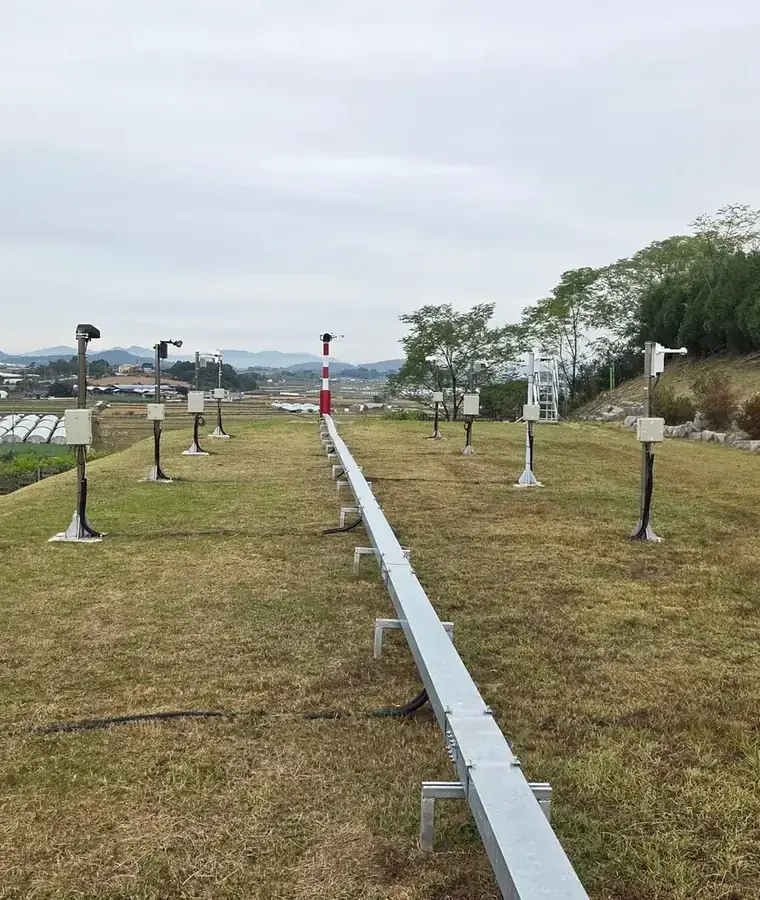
R&D · Field test · Gochang, Korea
11 visibility sensors.
One field. Same air.
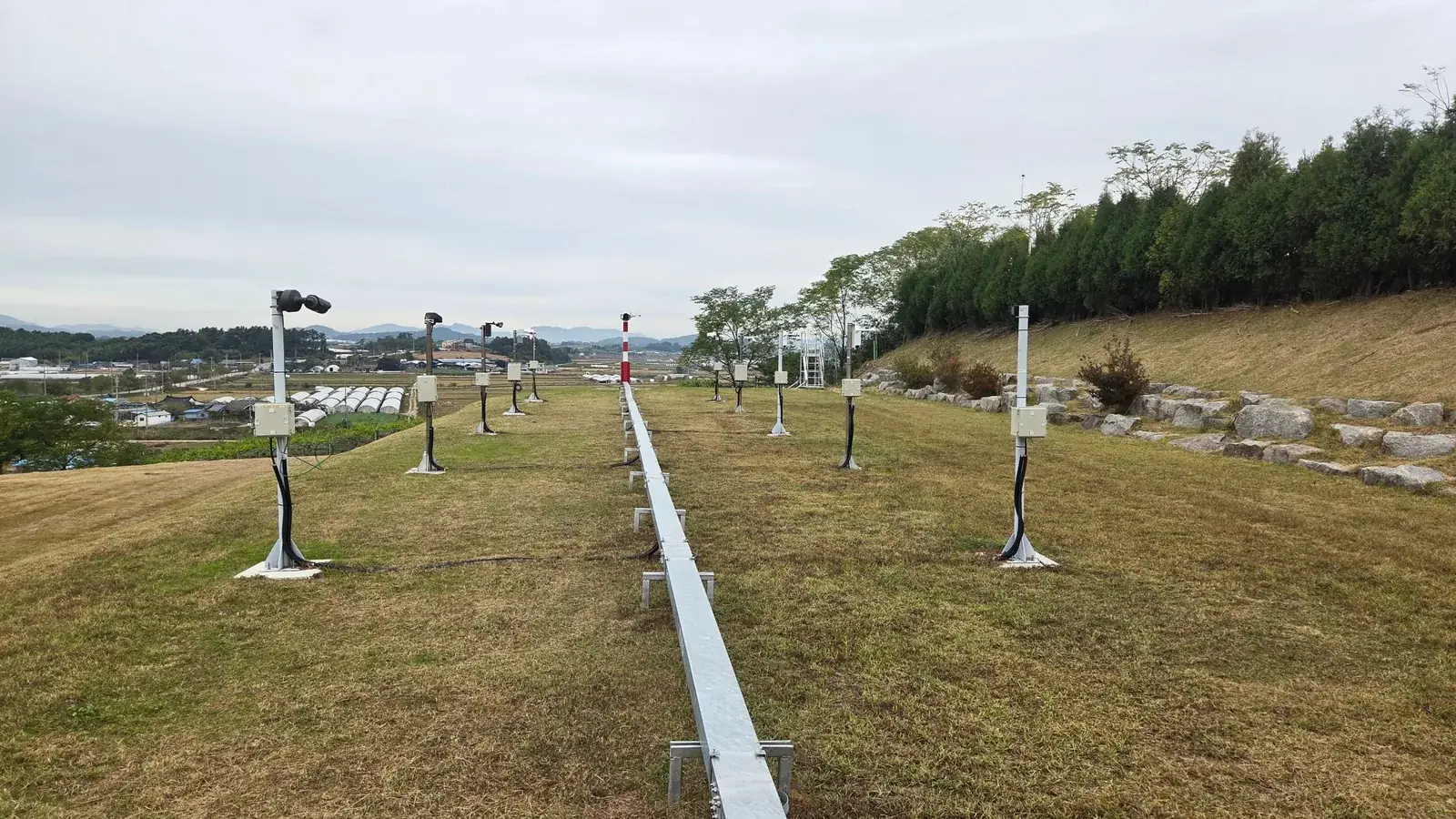
One ST-01 alongside 10 leading visibility sensors — intercomparison in the same observation row
Gochang Standard Weather Observatory, National Institute of Meteorological Sciences, KMA. Comparing readings under the same air at the same time builds the data for taking the AI video-based visibility meter to the WMO
11
Visibility sensors in total — same air, same time
10
Leading visibility sensors — including a reference transmissometer
1
SIJUNG ST-01 — AI video-based visibility meter
WMO
Goal: an intercomparison record
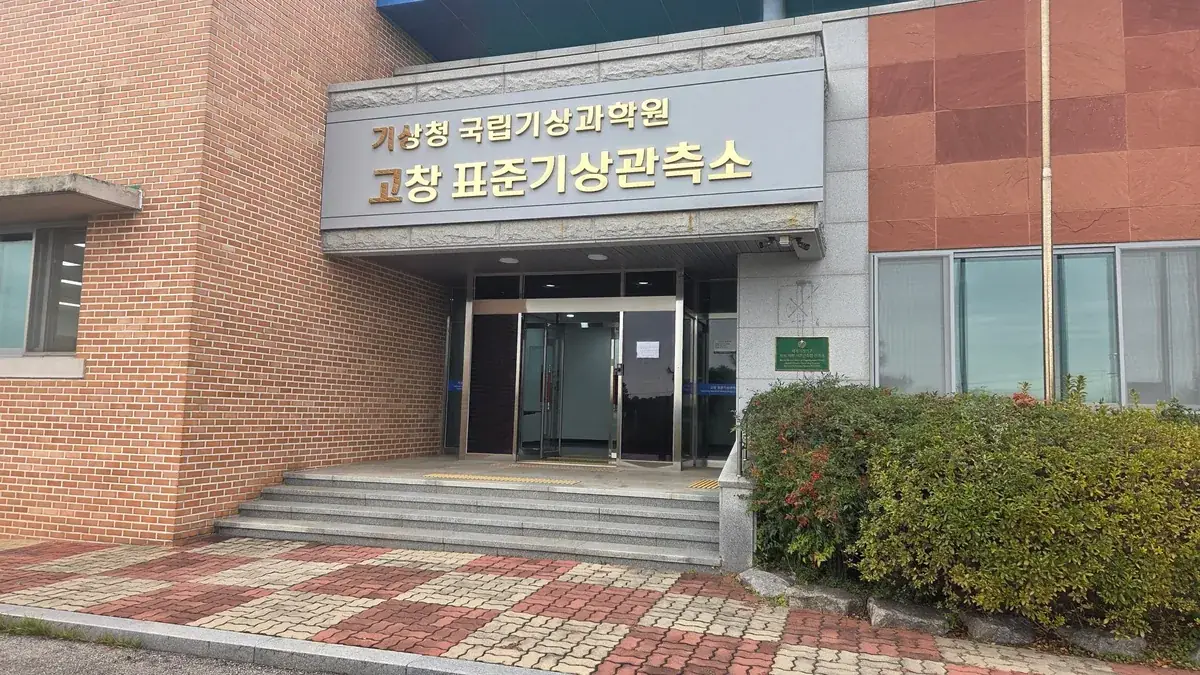
The test bed
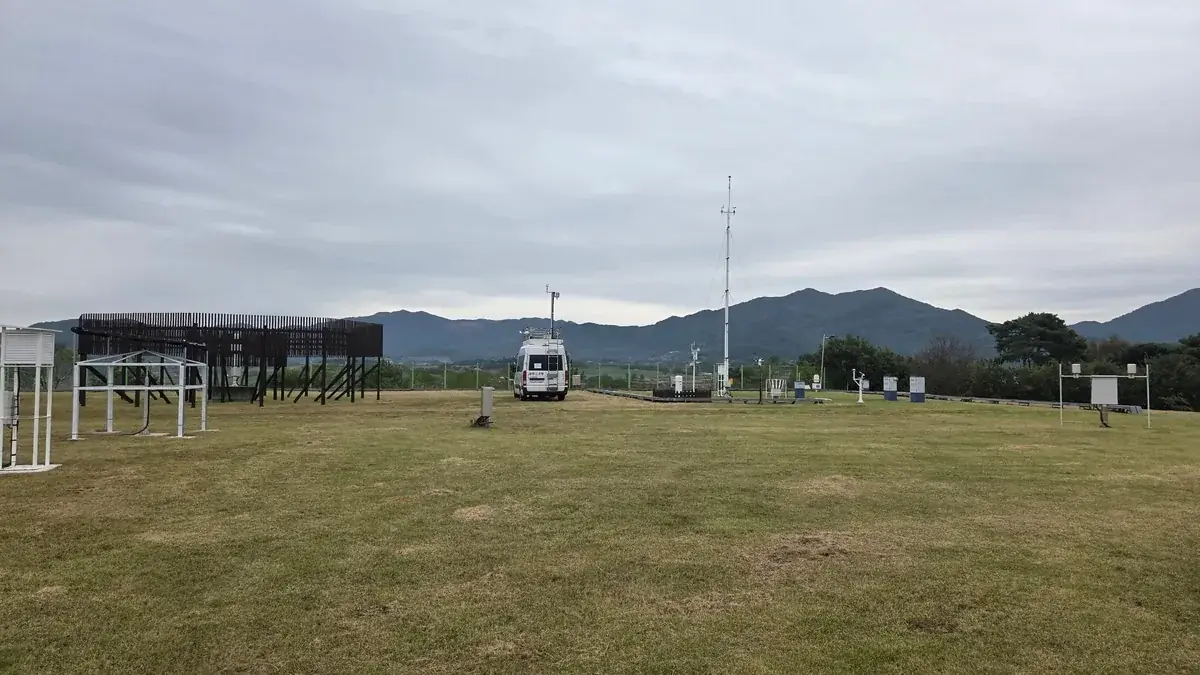
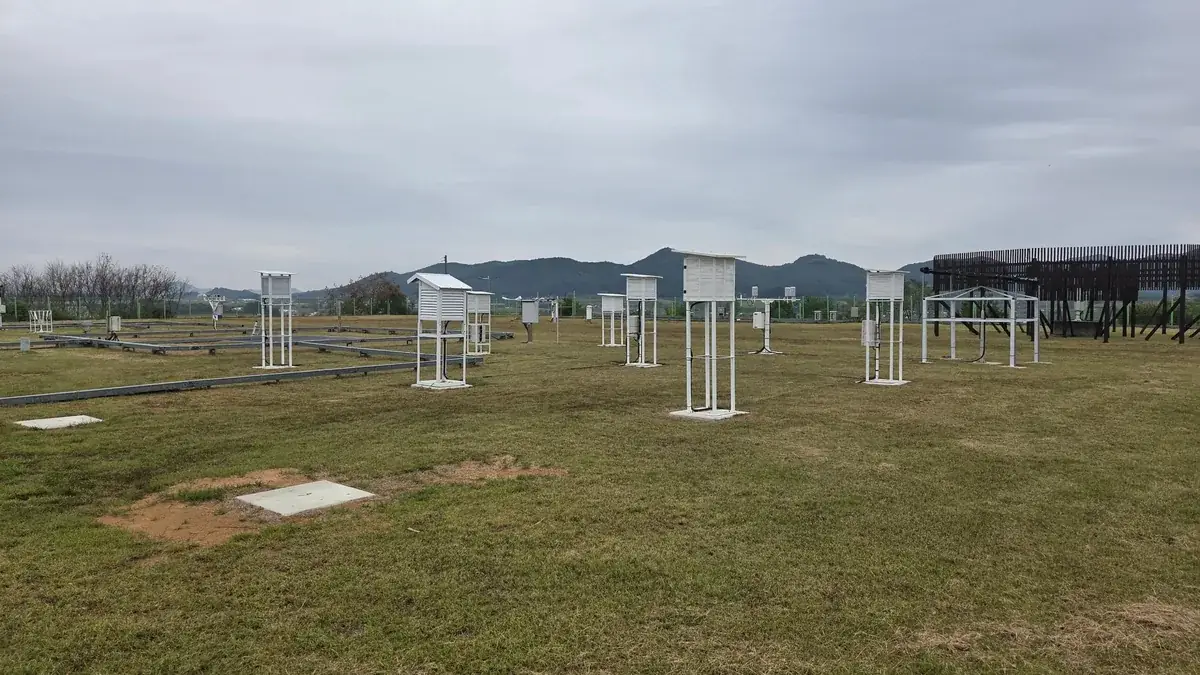
Gochang Standard Weather Observatory
Part of the National Institute of Meteorological Sciences, KMA. A standard observation field where many instruments run side by side under the same weather conditions
The lineup
11 visibility sensors in one observation row
11
Visibility sensors in total
Same air · same time
10
Leading visibility sensors
Including a reference transmissometer
1
SIJUNG ST-01
AI video-based visibility meter
 OURSSIJUNG ST-01
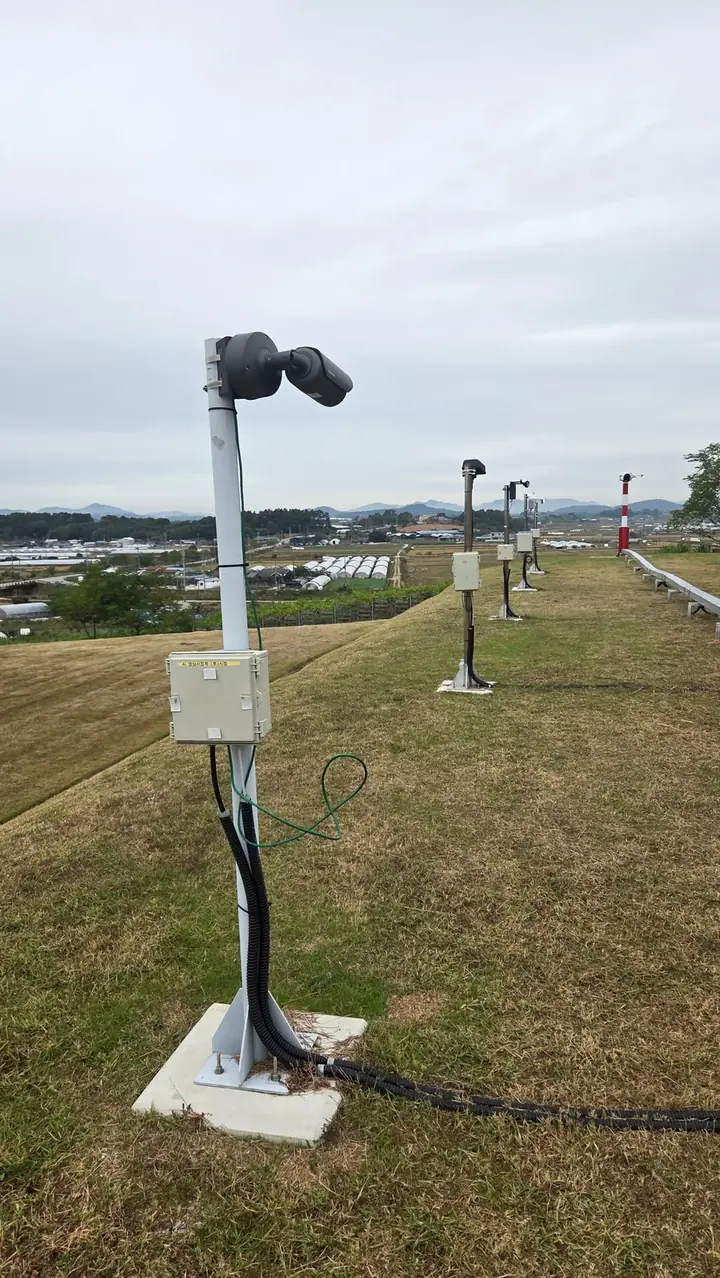
ST-01 · AI video visibility
Visibility you can see,
not just read.
AI video-based visibility meter installed in the same observation row as the 10 compared sensors
- Method
- Estimates the atmospheric extinction coefficient (σ) from target luminance contrast and computes the meteorological optical range (MOR) with AI
- Proof
- Every reading is recorded with its evidence images — verifiable afterward
- In this test
- Same site, same weather conditions and same time as the 10 compared sensors
What comes next · Toward WMO
Taking AI video-based visibility measurement to the WMO — roadmap for building intercomparison data
01
Collect In progress
Parallel observation with the 10 sensors by day and night, in fog, rain and other weather conditions
02
Compare
Deviation and correlation analysis at 1-minute resolution against the reference transmissometer and the compared sensors
03
Toward WMO
Building an intercomparison record to the WMO Guide to Instruments and Methods of Observation (WMO-No. 8)
SIJUNG · AI visibility
Follow the data from Gochang.
A Daejeon-based research-institute spin-off of the Korea Research Institute of Standards and Science (KRISS), building AI video-based visibility meters since 2016