
AI video analytics · Vision Guard Basic · Pro · NG-01s
Turn CCTV into data.
New value from camera video — privacy protection plus pedestrian traffic and visitor analytics
De-identification of personal information in video, plus pedestrian traffic and visitor analytics, powered by in-house video AI. Existing video is used safely and facility usage becomes data, raising work efficiency for public institutions and facility operators
| Item | Vision Guard Basic · Pro | NG-01s |
|---|---|---|
| Category | AI de-identification software | AI Video Analytics |
| Core product | De-identification software — Basic (laptop-installed) · Pro (online version) | AI Vision Computer (video analytics unit) |
| Main purpose | De-identifying faces and license plates; video editing (Pro) | Pedestrian traffic and visitor analytics |
| Installation | Basic: installed on a laptop · Pro: used online | CCTV + NG-01s + integrated operations server |
| Main customers | Public institutions and others (Basic is sold through Venture Nara) | Tourist sites · public institutions |
| Inquiries | Product purchase inquiry → | System deployment inquiry → |
AI de-identification software
Vision Guard Basic · Pro
Protects personal information in video while keeping the video useful. Software that uses AI to automatically detect and de-identify people's faces and license plates in photos and videos
- Basic · laptop-installed
- Pro · online version · video editing
- No extra sensors or CCTV needed
- Basic · Venture Nara (PPS) designation No. 2025-04-0033

Supports privacy protection when public institutions handle video, such as viewing and releasing CCTV footage. Image and video files are loaded, de-identified and saved
Key features — five de-identification functions
01
AI automatic de-identification
Automatically detects people's faces and license plates in video and images, then de-identifies them
02
Mosaic · blur
Choose a mosaic or blur effect for personal-information areas
03
Choice of targets
Select what to process, such as faces, people and license plates
04
Adjustable strength
De-identification strength adjusted to how the video will be used
05
Image and video processing
Load photos and recorded video files, de-identify them and save the results
Product lineup
- Vision Guard Basic — de-identification software installed and used on a laptop. Sold to public institutions and others through Venture Nara (PPS)
- Vision Guard Pro — online version. Adds video editing to the de-identification functions
- Detailed features and supply terms follow the product specifications and release policy
Main applications
- Public institutions · local governments
- Integrated CCTV control centers
- Apartment and housing complex management offices
- Video handling at police and administrative agencies
- Privacy protection for companies and general users
“Using video and protecting privacy, together” — automatic detection and de-identification of personal information reduces manual work and supports safe use of video
AI video analytics · AI Vision Computer
NG-01s
Turns existing CCTV into an intelligent traffic analysis system. AI analyzes CCTV video at tourist sites, public institutions and public facilities to generate data on pedestrian traffic, direction of movement and visitor characteristics
- Existing CCTV or new installation
- Processed on site · only de-identified video and statistics leave the site
- Full HD 25 FPS real-time processing
System architecture — from CCTV to the integrated operations server
- 01Existing · new CCTV On-site video capture
- 02NG-01s (AI Vision Computer) Object detection · traffic counting · direction of movement · visitor characteristics · de-identification
- 03Integrated operations server Central management of analysis results · statistics · operations dashboard · AI content management
Key features — seven functions
01
AI traffic analysis
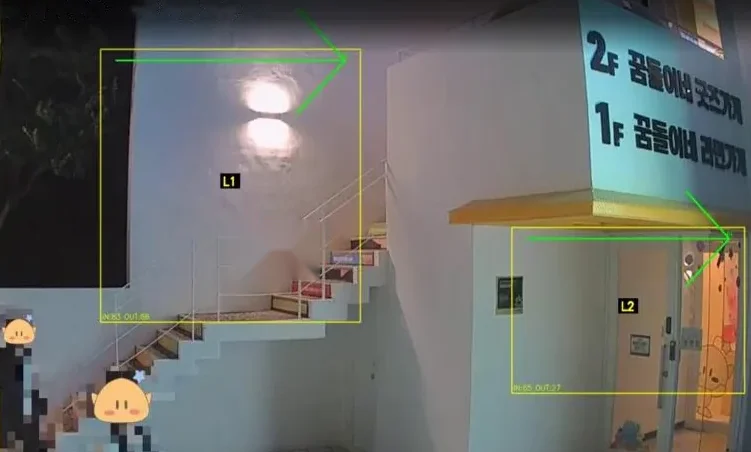
Automatically counts pedestrians at entrances and main walkways, analyzing entries, exits and direction of movement
02
Visitor statistics
Hourly and daily visitor statistics and usage trends show how a facility is operating
03
Visitor characteristics
Estimated gender and age-group statistics show visitor distribution and on-site usage patterns
04
Personal-information de-identification
Identifiable areas such as people and faces are de-identified, for an analysis environment designed around privacy
05
AI on-site reaction analysis
Estimates on-site reactions and satisfaction from visitors' facial expressions, as reference material for evaluating tourist facility operations
06
Integrated operations server
Combines analysis results from many CCTV cameras to manage visitor statistics and facility usage
07
Automatic AI content generation
Automatically generates LLM content and operating information from visitor statistics and on-site analysis
Operating screens — live video · visitor statistics
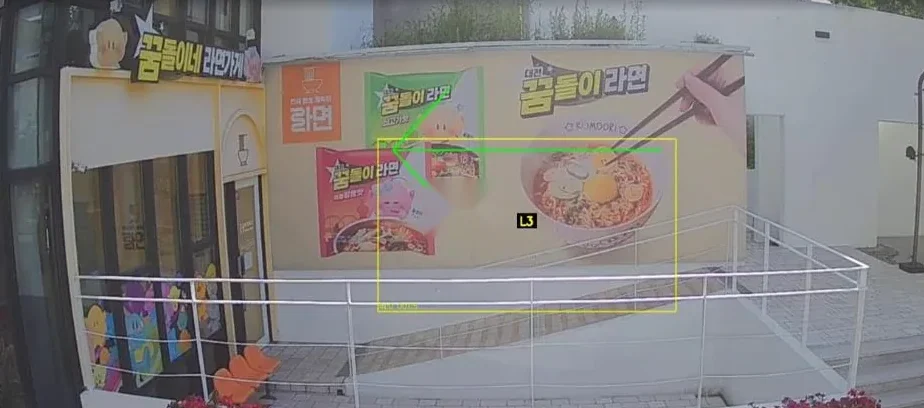
Real-time analysis of the traffic counting zone (L3)
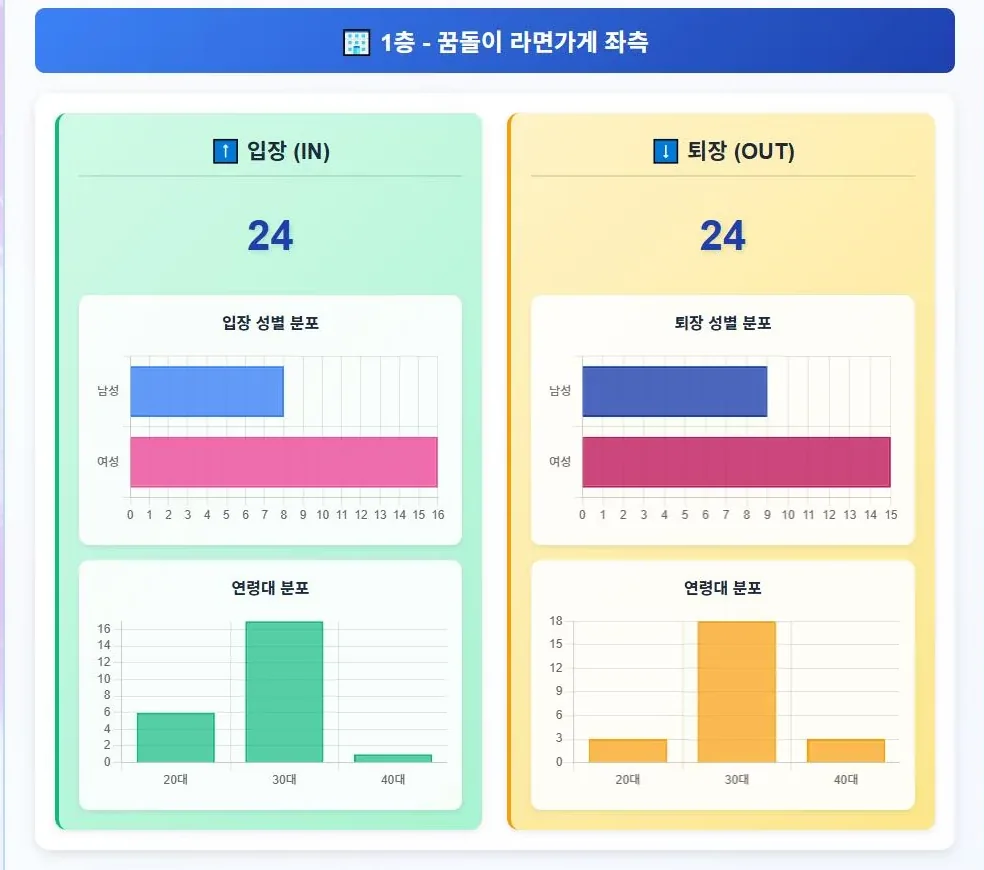
Entries (IN) and exits (OUT) with gender and age-group statistics
Deployment options
- Existing CCTV — video from CCTV already in operation is connected to the NG-01s, reducing the need for extra cameras
- New CCTV installation — new CCTV is installed at entrances, walkways and tourist facilities and connected, with a setup proposed for the site and analysis goals
Main applications
- Tourist sites and resorts — visitor inflow and hourly visit trends
- Local governments and public institutions — entries to government buildings and public facilities, and how they are used
- Parks, plazas and walkways — pedestrian traffic and main directions of movement
- Museums and exhibition halls — visitor entries and usage by facility
- Local festivals and event venues — inflow and hourly changes in visitor numbers
- Public amenities — facility usage and operating demand
R&D · Field demonstration — Kumdori House, Daejeon Expo
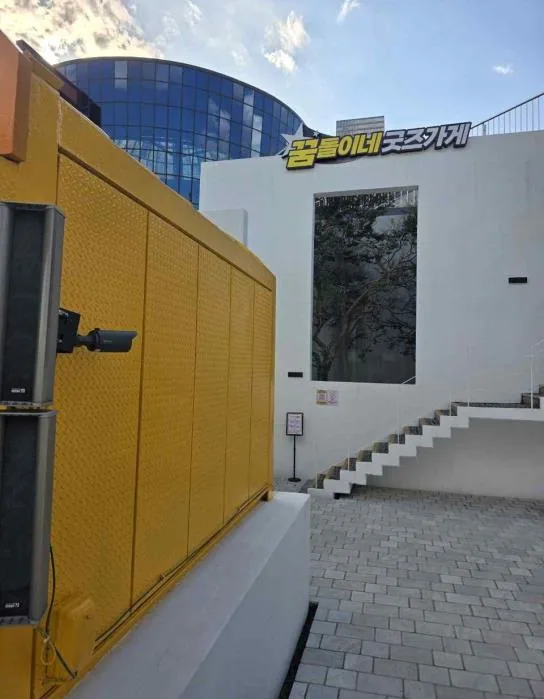
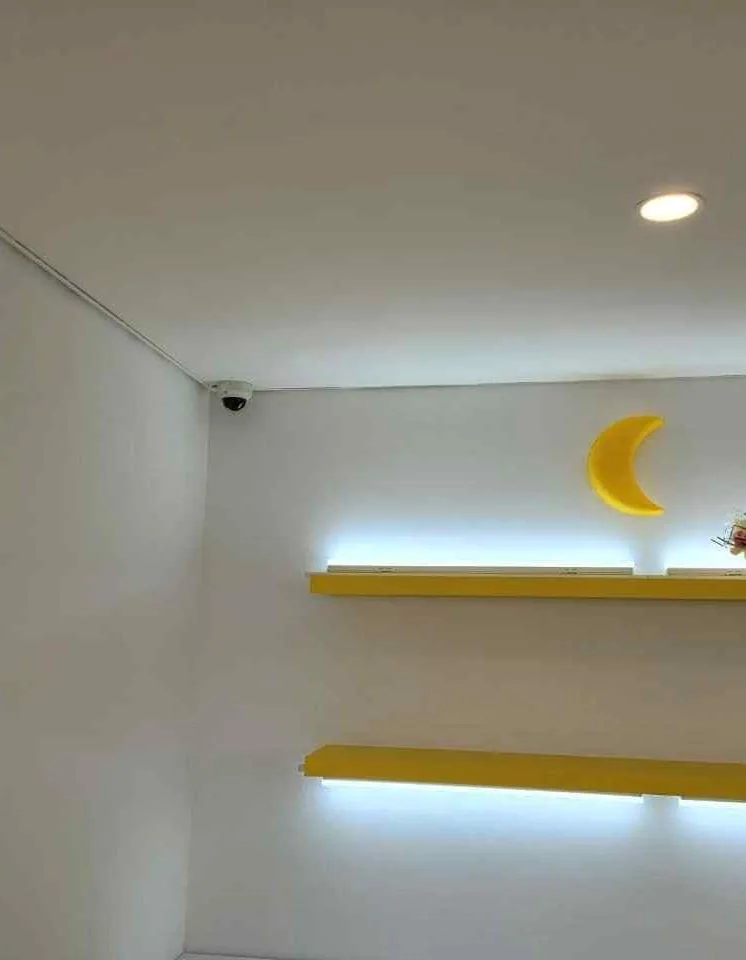
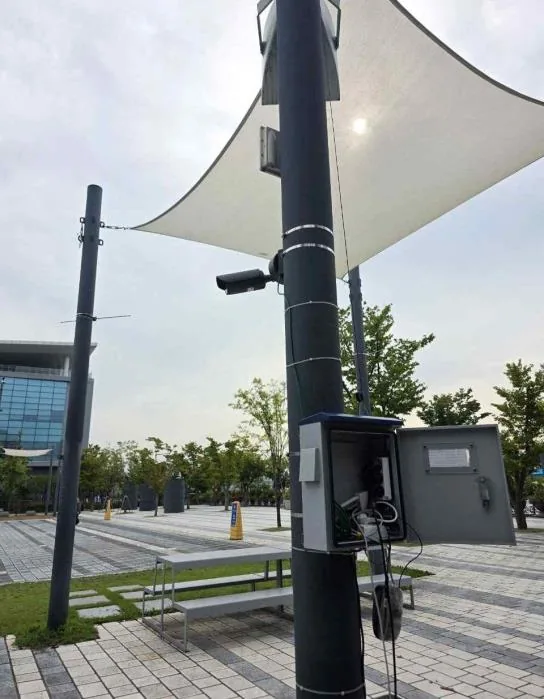
Over two years (2024–2025), a regulatory-sandbox R&D project with the INNOPOLIS Foundation developed technology for protecting personal information in video, traffic analysis, visitor characteristics analysis and automatic AI content generation. Field demonstrations covered entries and exits on floors 1 and 2 of Kumdori House in Daejeon, indoor movement and the outdoor park route — original video was processed on site, and only de-identified video and statistics were provided externally
25FPS
Full HD real-time processing
100%
Face and person areas de-identified
6/6
Quantitative targets met
1
Patent application filed
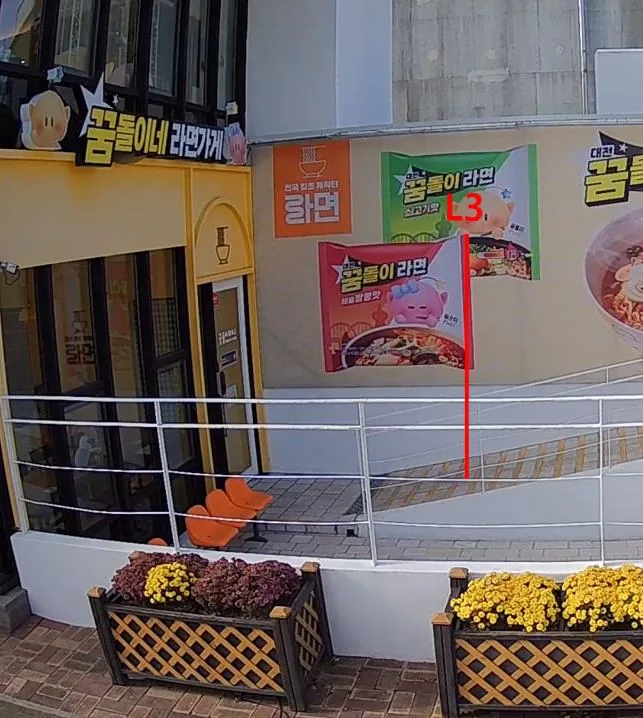
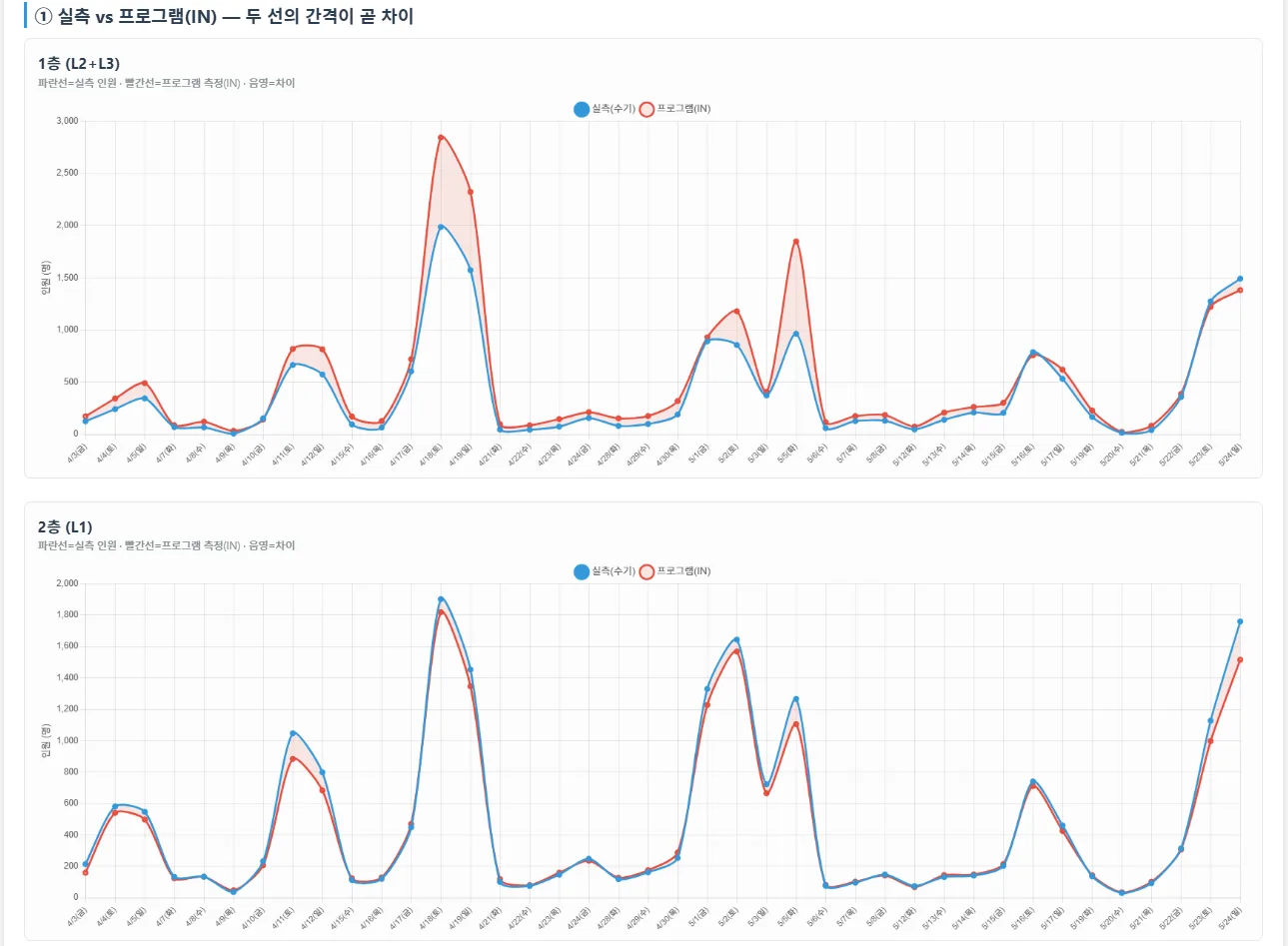
Measured visitor counts vs AI analysis — hourly trends by floor
“New data from existing CCTV” — existing video infrastructure turns people's movement into quantitative data for data-driven facility operation and decisions
Contact
Consultation on using video data
After checking your existing CCTV, analysis goals and privacy requirements, our engineers propose a Vision Guard or NG-01s setup